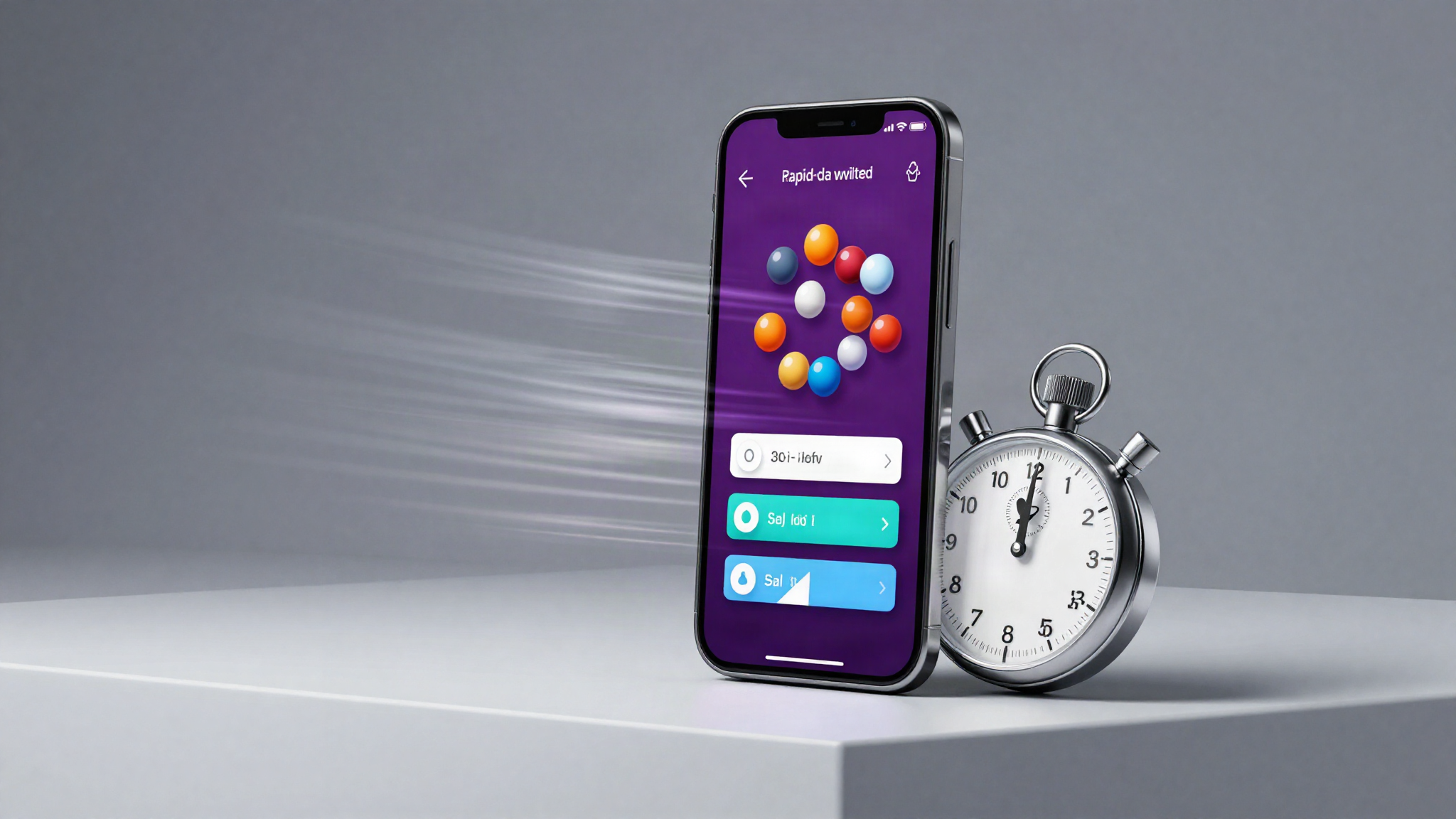
Rapid-draw lottery interfaces compress selection, confirmation, publication, and the next round into a very short cycle. That pace creates a usability challenge: users must distinguish what is still editable from what has already been accepted, closed, or recorded. Speed does not change the mathematics of a random draw, but it can increase cognitive load and make technical mistakes harder to notice. A clear interface should slow important decisions down even when the draw schedule itself remains fast.
Contents
- Separate the Countdown Into Meaningful Stages
- Give Every Round a Stable Identifier
- Distinguish Selection From Server Confirmation
- Read Fast-Draw Rules Before Following the Timer
- Do Not Treat Frequency as Predictive Evidence
- Use Session Time Rather Than Round Count
- Verify Results Through the Archive
- Run a Rapid-Draw Interface Checklist
Separate the Countdown Into Meaningful Stages
One timer is not enough if it fails to explain what the remaining time controls. The interface should distinguish an open selection period, a closing or synchronization period, result publication, and preparation for the next round. Colors alone should not communicate those states because they can be misread or inaccessible. Labels, shapes, and disabled controls should work together so that a user never mistakes a closed round for an open one.
Give Every Round a Stable Identifier
When examining a rapid interface associated with QQ88, first locate the round identifier and confirm that it appears consistently on the selection view, confirmation message, result, and history entry. Time alone is an unreliable identifier because rounds can cross time zones or appear beside delayed data. A stable ID makes it possible to reconcile one action with one published result without relying on memory or screen position.
Distinguish Selection From Server Confirmation
A highlighted option may exist only on the phone until the remote system accepts it. The interface should show separate selected, submitted, accepted, and settled states. If the connection slows near the cutoff, repeated taps can increase confusion rather than fix it. Wait for an explicit response, then inspect the history before trying again. An animation or sound is useful feedback, but it should never be the only proof that an action was recorded.

Read Fast-Draw Rules Before Following the Timer
A page labeled xổ số siêu tốc may help users locate a rapid-draw section, but the full rules should explain closing times, result generation, canceled rounds, duplicate requests, connection interruptions, and correction procedures. Check which clock is authoritative and whether a displayed countdown is synchronized with server time. A fast format still requires transparent settlement rules and an accessible record of completed rounds.
Do Not Treat Frequency as Predictive Evidence
Short intervals produce long result lists quickly, making repeated values and apparent streaks easy to notice. Those patterns do not make another value due when each valid draw is independent. An archive can describe past frequency, verify results, or reveal missing records; it cannot guarantee the next outcome. Rapid repetition may strengthen the feeling that a pattern is meaningful even when it is ordinary variation in random data.
Use Session Time Rather Than Round Count
A limit of “a few rounds” becomes ambiguous when rounds last only minutes or seconds. Set a fixed end time with the phone’s clock before opening the interface. Add a spending ceiling that remains unchanged regardless of wins, losses, or perceived streaks. A visible session timer and periodic pause can reduce automatic continuation. If the platform immediately advances to another round, the user’s personal limit should still determine when the session ends.
Verify Results Through the Archive
After publication, match the round ID, result time, final status, and account record. A cached screen may show an earlier state, so refresh carefully and compare the update timestamp. If a result is corrected, the archive should preserve a notice rather than silently replacing it. Save the relevant identifiers when contacting support, but never share passwords, one-time codes, complete payment details, or remote access to the device.
Run a Rapid-Draw Interface Checklist
- Identify the current round and its authoritative closing time.
- Confirm that selection, acceptance, and settlement look different.
- Verify each completed action against the matching archive entry.
- Set fixed time and spending limits before the first round.
- Stop when the interface, connection, or record becomes unclear.
Lottery participation may be restricted by location and age, so users must check local requirements first. A faster draw schedule cannot create guaranteed returns or make previous results predictive. The most responsible design gives users unmistakable states, reliable records, strong pause controls, and enough time to understand each decision. When speed begins to replace deliberate choice, ending the session is the clearest control available.