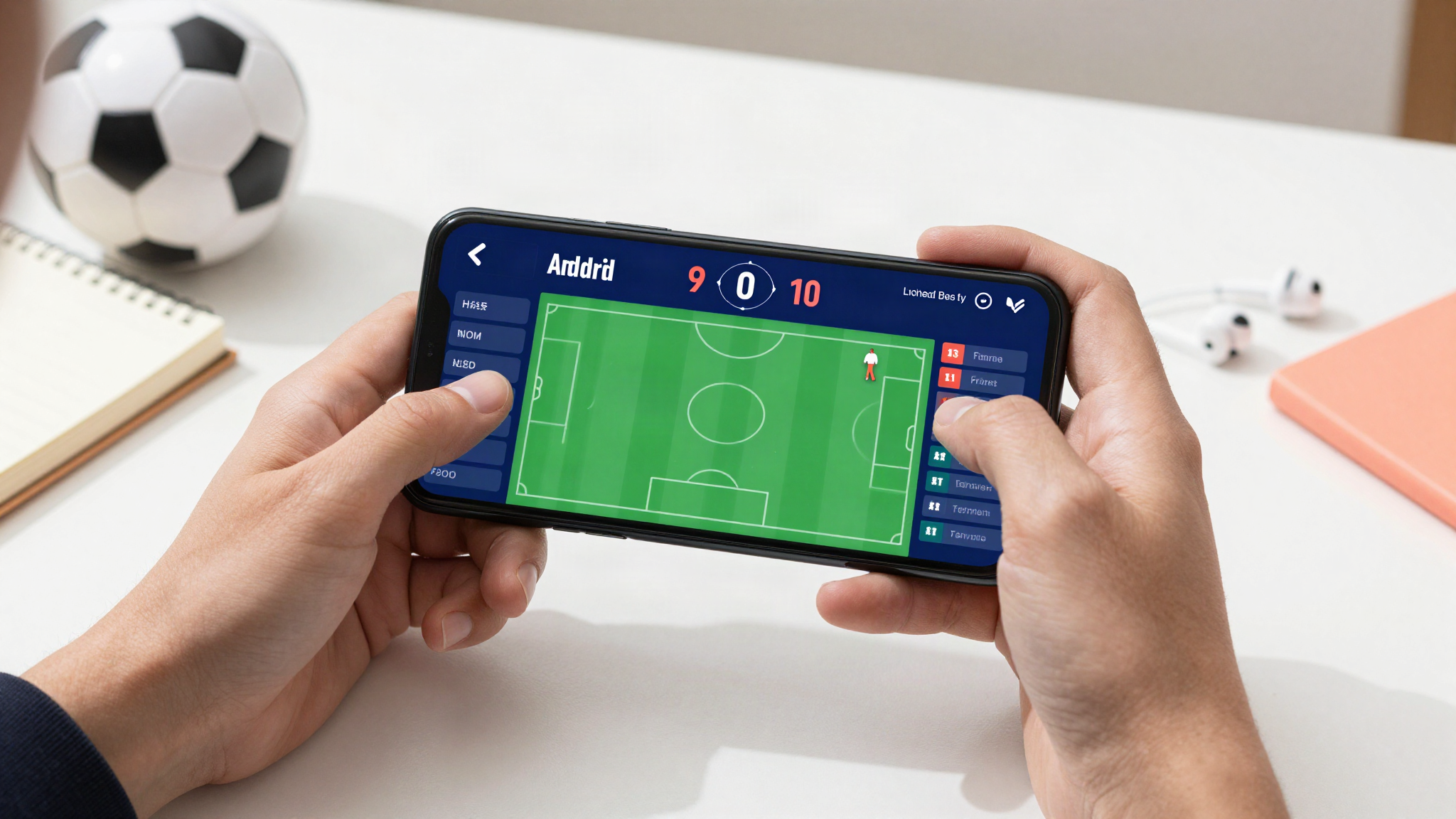
A live football dashboard can place the score, clock, possession, shots, cards, substitutions, and formations on one small screen. That information is useful, but it does not arrive with equal speed or reliability. Reading it well requires attention to context rather than reacting to whichever number changes most recently.
Someone following a match through sbotop should first confirm the competition, teams, venue, and match status. Similar club names, youth fixtures, and delayed games can appear close together in a crowded mobile feed.
Contents
- Check the Match Clock
- Expect a Data Delay
- Read the Event Timeline First
- Do Not Equate Possession With Control
- Separate Shots From Shots on Target
- Treat Expected Goals as an Estimate
- Review Cards and Fouls Together
- Understand Substitution Effects
- Verify Starting Lineups
- Watch for Corrected Events
- Configure Alerts Selectively
- Use Statistics as Context
Check the Match Clock
The displayed minute may be an estimate generated by the data provider. It can pause during an interruption or move ahead of a delayed video stream. A clock showing 70 minutes does not always mean exactly 70 minutes have been played.
Added time should also be distinguished from extra time. A notation such as 90+4 belongs to regulation play, while extra time is a separate period used in selected knockout matches.
Expect a Data Delay
Live information passes from the stadium through data collectors, processing systems, and the mobile service before reaching the screen. Different statistics can update at different moments.
A goal alert may appear before the event is visible on a stream, while possession can update more slowly. Refreshing repeatedly does not necessarily remove this delay and may reset the page.
Read the Event Timeline First
The timeline explains major changes in the match. Goals, red cards, substitutions, penalties, and injuries provide context for statistical shifts that occur afterward.
If one team’s possession suddenly rises, check whether the opponent began defending a lead or lost a player. The same number can describe very different match situations.
Do Not Equate Possession With Control
Possession shows how the ball is divided, not where it is used or how dangerous the attacks are. A team can hold the ball in harmless areas while its opponent creates better opportunities through quick transitions.
Compare possession with territory, shots, set pieces, and the score. No single percentage provides a complete description of performance.
Separate Shots From Shots on Target
A total shot count can include blocked attempts and efforts that miss by a wide margin. Shots on target generally indicate that the goalkeeper or goal line prevented a goal, but they still vary greatly in quality.
One close-range attempt can be more dangerous than several speculative efforts. When available, shot locations and chance-quality measures add useful context.
Treat Expected Goals as an Estimate
Expected-goals models assign values to chances using factors such as distance, angle, pass type, and defensive pressure. Providers can use different models, so figures may vary between services.
Expected goals can describe chance quality over time, but they do not replace the actual score or predict the next event with certainty. A low-value opportunity can still become a goal.
Review Cards and Fouls Together
A high foul count does not automatically indicate that a team is close to receiving a red card. Location, severity, repetition, and the referee’s decisions all matter.
Yellow cards can influence defensive behavior, particularly for players responsible for stopping fast attacks. Check which positions received cards instead of considering only the team total.
Understand Substitution Effects
A substitution can respond to injury, fatigue, tactical adjustment, or time management. The player entering the match may change the formation even when the mobile display updates slowly.
When using sbotop sports, compare the substitution timeline with the latest formation and event sequence. Do not assume that every attacking player introduced creates an immediate increase in pressure.
Verify Starting Lineups
Pre-match lineups can be corrected after publication. Confirm late changes and determine whether players occupy their usual roles. A familiar name in an unfamiliar position can change how the team functions.
Formation diagrams are simplified representations. Teams regularly change shape depending on whether they possess the ball, defend, or press an opponent’s restart.
Watch for Corrected Events
A goal can be disallowed after review, a scorer can be reassigned, and a card can initially appear against the wrong player. Reliable services revise the timeline when official information changes.
Wait for confirmation before treating an unusual event as final. The official competition or club channel should take priority when several pages disagree.
Configure Alerts Selectively
Goal, card, substitution, halftime, and final-score notifications can create excessive noise. Select only the alerts needed for the way the match is being followed.
Mute score notifications when watching a delayed stream to avoid spoilers. Hide previews on the lock screen if the device is visible to other people.
Use Statistics as Context
Live data helps supporters understand the developing match, but it cannot capture every tactical movement, defensive action, or change in intensity. Important information may also be delayed or corrected later.
Users should verify final results through authoritative sources and treat any paid activity as optional entertainment where legally permitted. Maintain a fixed budget, follow minimum-age rules, and never interpret one live statistic as certainty about the final outcome.