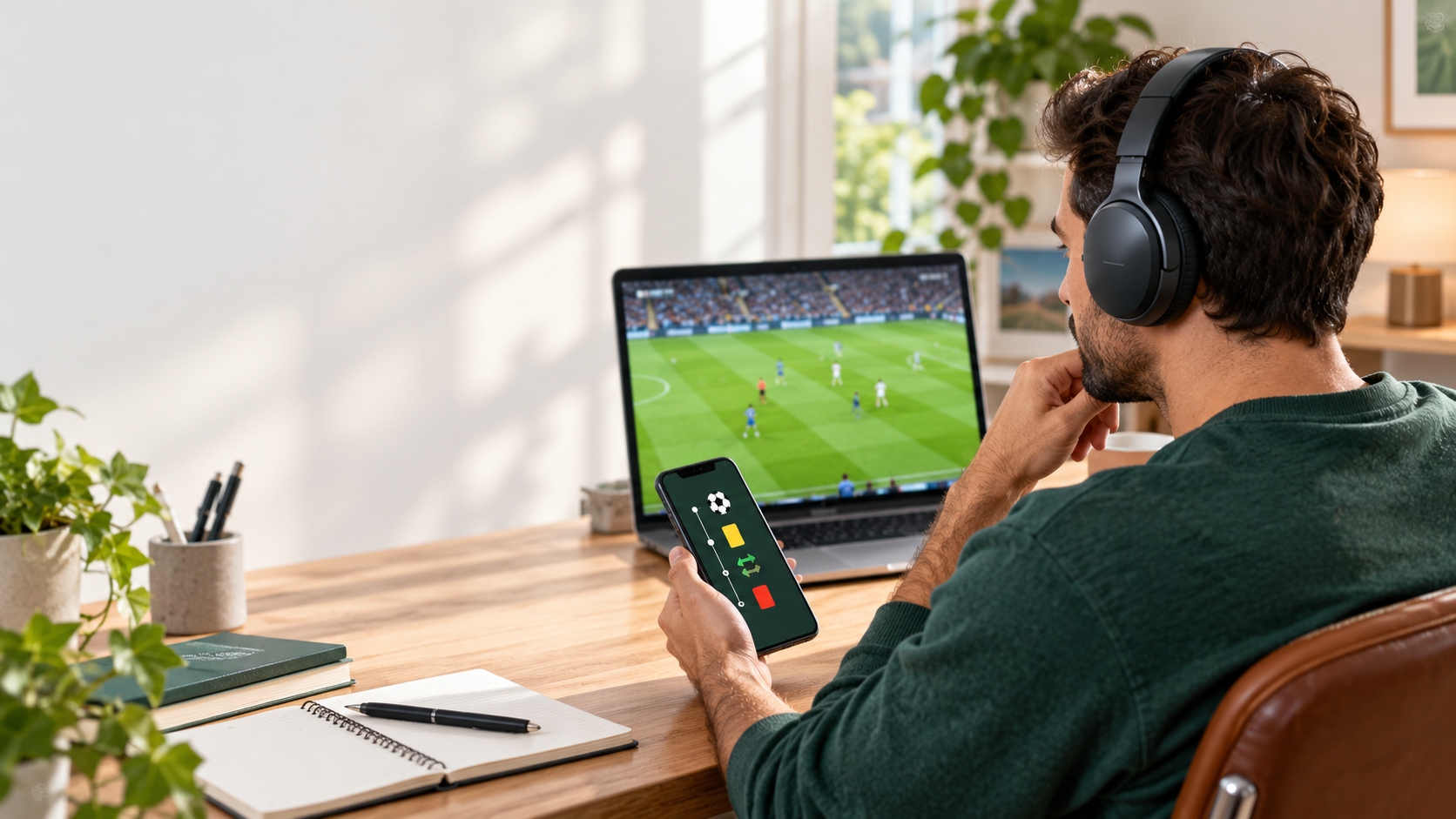
Football is designed to be watched, but daily life does not always allow ninety uninterrupted minutes in front of a screen. Cooking, household work, accessibility needs, and other responsibilities may require supporters to rely mainly on sound and occasional visual checks. A platform such as Socolive can be part of that setup, but the experience works best when audio, event alerts, and device safety are planned before kickoff.
Contents
Choose an Audio-First Source
Start with a feed that provides clear commentary and stable sound even when the video is not being watched continuously. The commentator should identify possession changes, important locations, substitutions, cards, and confirmed goals rather than assuming that every listener can see the action.
Test the volume and audio synchronization several minutes before kickoff. If commentary runs noticeably ahead of or behind the picture, restart the player and check the device’s output settings. Bluetooth speakers and headphones may introduce their own delay, so compare them briefly with the phone or laptop speakers.
Keep the Screen Available but Secondary
Place the device on a stable stand where it can be checked safely without being held. Full-screen video is unnecessary when the main purpose is listening. A simple match center showing the score, clock, and event timeline is easier to glance at than a crowded page.
When using Socolive trực tiếp, close unrelated tabs and promotional overlays before beginning another task. Prevent the phone from rotating or locking unexpectedly, but avoid disabling security settings merely to keep playback active.
Use Alerts for Major Events Only
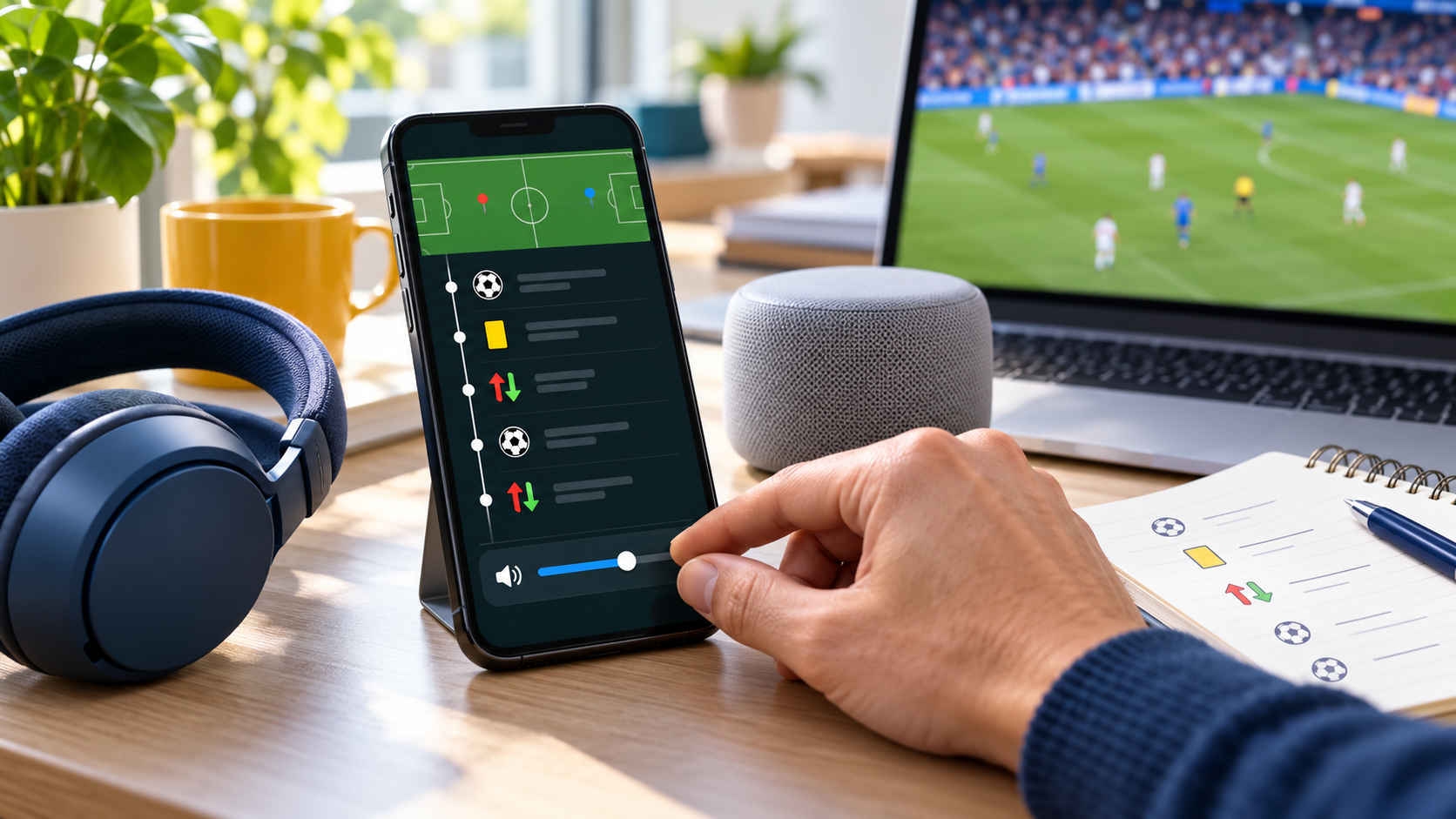
Enable notifications only for goals, cards, substitutions, and the start or end of each half. Alerts for every attack or statistic create noise and make the audio difficult to follow. If the data feed runs ahead of the commentary, disable goal notifications to preserve the natural sequence of the match.
Distinct vibration patterns can help users recognize an important event without opening the screen. Keep lock-screen previews short so they do not expose unrelated personal messages when the device is shared or placed in a common area.
Listen for Structure, Not Just Excitement
Good audio following depends on more than waiting for a commentator’s voice to become louder. Listen for repeated references to width, pressure, transitions, and the areas where possession changes. These details can reveal the shape of the match even when individual passes are not visible.
At a natural break, check the lineup or event map to confirm unfamiliar player names and substitutions. Avoid opening several statistical panels while completing another task. The goal is to restore context quickly, not recreate the entire visual broadcast on a smaller screen.
Protect Hearing and Attention
Set headphones at a moderate volume and take them off during halftime. Noise-cancelling models can reduce the need for high volume, but they may also block household sounds, alarms, or other people. Use transparency mode or a single speaker when awareness of the surroundings is important.
Do not handle or watch a phone while driving, cycling, crossing roads, operating equipment, or performing any activity that requires full attention. If audio is permitted and safe, configure it before starting and use hands-free controls. Missing part of a match is always preferable to creating a safety risk.
Prepare for Interruptions
Know whether the player resumes from the live point or the moment when it was paused. These behaviors create different experiences after a call or network interruption. If spoilers matter, pause notifications until playback catches up.
Keep a charger nearby and check data consumption when using a mobile connection. Audio-only options generally require fewer resources than continuous high-resolution video, but actual usage depends on the service. Avoid changing quality settings repeatedly while attention belongs elsewhere.
Reconstruct the Match Afterwards
After the final whistle, review the event timeline, substitutions, and a short authorized highlight package. This fills gaps without requiring the full match to be watched again. Compare the commentary impression with the recorded events and note where sound alone created a different understanding.
An audio-first setup cannot reproduce every tactical detail, but it can keep supporters connected when sustained viewing is impractical. Clear commentary, restrained alerts, safe device placement, moderate volume, and a brief post-match review create a useful experience without demanding constant attention from the screen.