
A football fixture list looks simple until time zones, broadcast selections, postponed matches, and overlapping competitions begin to create confusion. Supporters who follow several leagues need more than a screenshot saved at the beginning of the month. They need a small verification routine that keeps every kickoff attached to the correct date and local time. A platform such as xoilac can serve as one discovery point, but the final calendar should always be organized around current match information and the viewer’s own location.
Contents
Choose a Clear Reference Time Zone
Start by confirming which time zone a fixture page uses. Some schedules display the competition’s local time, while others automatically adapt to the device. This difference becomes important when an evening match in Europe appears after midnight in Asia. A date shown without a time-zone label should be treated cautiously.
Set the phone, computer, and calendar application to the correct regional zone rather than a fixed numerical offset. Regional settings can account for daylight-saving changes, while a manually entered offset may become inaccurate when clocks move. For international tournaments, record both the venue time and the converted local time if travel or group planning is involved.
Verify the Match Before Saving It
Do not build a calendar from an old image or social post. Open a current lịch thi đấu page and confirm the competition, round, home team, away team, date, and kickoff time. Similar club names and reserve teams can create errors, especially in domestic cups and youth competitions.
For important matches, compare the listing with an official league, club, or tournament source. The two sources should agree on the date and time. If they do not, note the discrepancy instead of guessing. Publication timestamps are helpful because a recently updated schedule is more likely to include broadcast-driven changes.
Expect Fixtures to Move
Football schedules are provisional more often than many viewers realize. Television selection, cup progression, weather, security decisions, stadium conflicts, or travel disruption can move a match. A calendar entry created weeks in advance should therefore include the competition and round, not just the two team names.
Check upcoming entries again seven days before kickoff and once more on matchday. Turn on notifications from a trusted source when following a match that may be rescheduled. If a fixture is postponed without a replacement date, keep it in a separate “to be confirmed” list rather than assigning an estimated time.
Create Calendar Entries That Are Useful
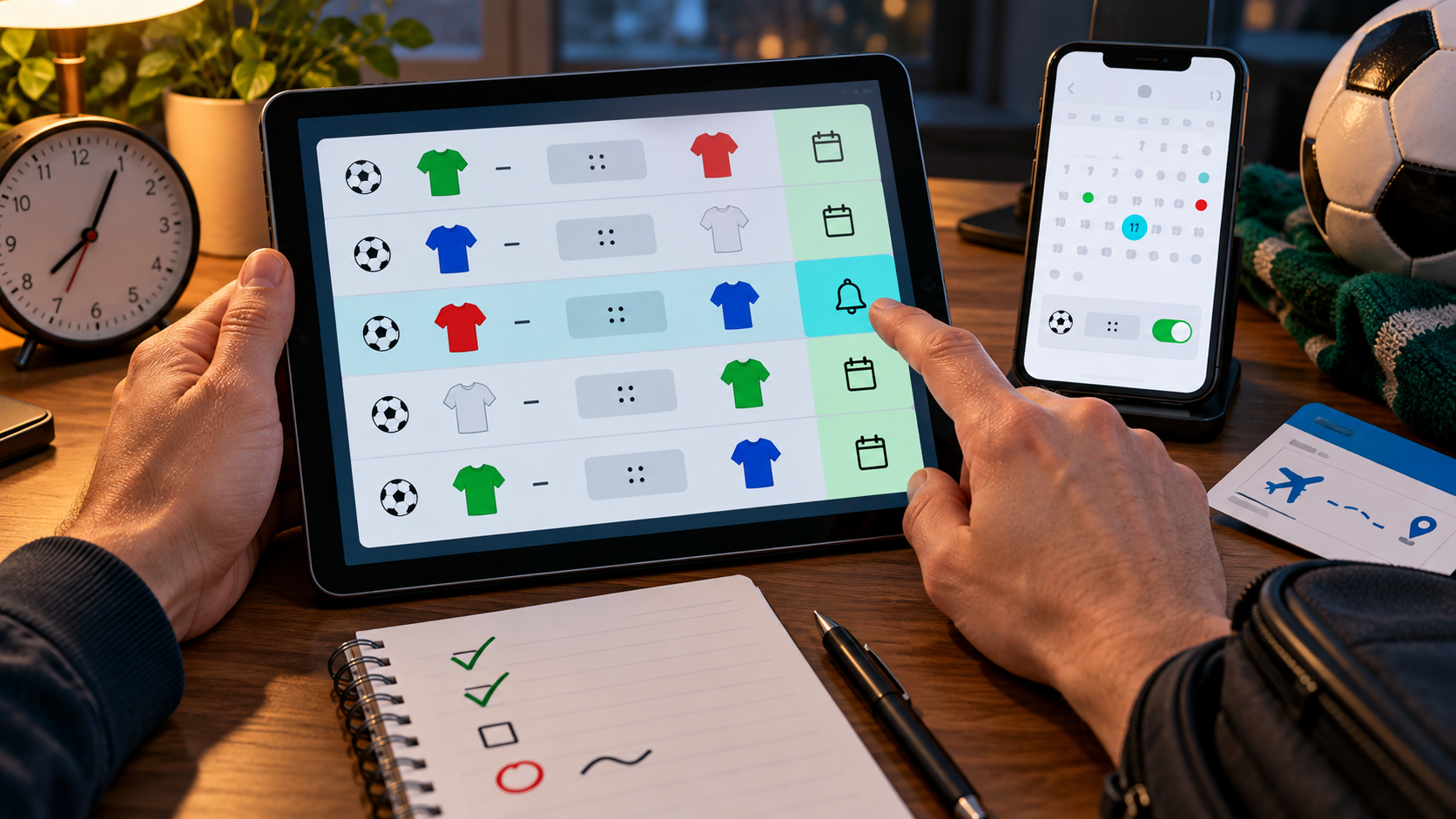
A good entry contains a concise title, local kickoff time, competition name, and source link. Add a reminder early enough to check team news or prepare a viewing setup, but avoid several notifications for every match. Fifteen to thirty minutes is practical for ordinary viewing, while travel to a venue requires a separate departure reminder.
Use consistent colors for competitions instead of individual teams. This makes crowded weekends easier to scan and helps distinguish league matches from cups or international fixtures. Set a realistic end time as well. A league match usually fits within a two-hour viewing block, while knockout games may require additional time for extra periods and penalties.
Handle Overlapping Matches Deliberately
When two fixtures overlap, decide in advance which one to follow live and which one to review later. Marking both as identical priorities produces unnecessary alerts and makes the calendar less useful. Consider likely importance, available replay options, and whether score notifications could reveal the result.
Group viewers should share one converted time rather than sending screenshots from different devices. A calendar invitation is safer because each participant’s application can display the event in the appropriate local zone. Include the original source link so everyone can check for late changes.
Run a Weekly Five-Minute Review
At the beginning of each week, scan the next seven days, verify priority matches, remove duplicates, and resolve any unconfirmed times. This short review is more reliable than attempting to perfect an entire season at once. It also catches daylight-saving adjustments and newly scheduled cup fixtures before they cause missed kickoffs.
An accurate football calendar is not merely a copied list. It is a maintained record built from current sources, correct time-zone conversion, clear reminders, and regular checks. With that routine in place, supporters can spend less time searching for kickoff information and more time following the matches they selected.